
Game overview · · 6 min read
Tidy Tiles: the robot vacuum that never stops
Tidy Tiles is out on iPhone: swipe a robot vacuum that cannot stop, clean every dusty tile, earn gifts and decorate a home of your own.
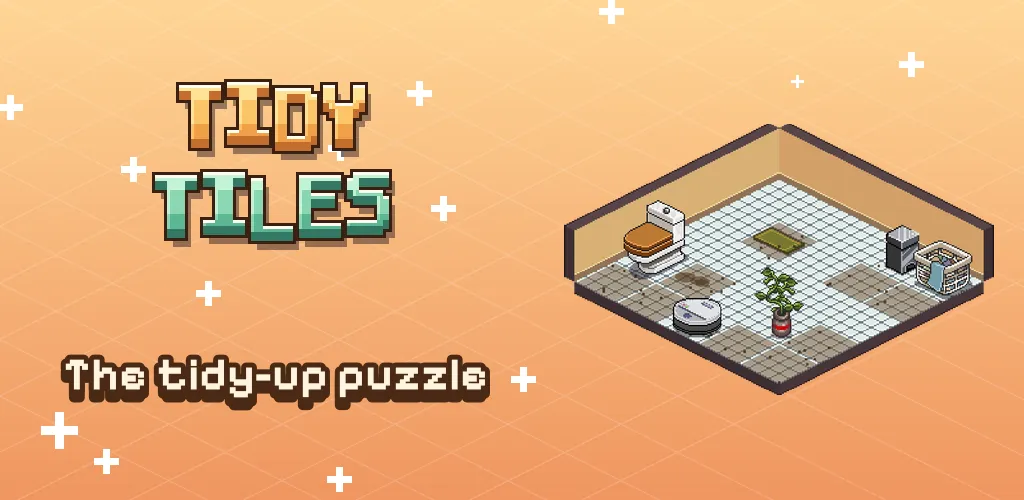
One rule: the robot never stops halfway
Tidy Tiles is a cozy sliding puzzle built around a single rule. Your little robot vacuum has one quirk: once it starts moving, it keeps going until it bumps into something. It cleans every tile it passes on the way, and it stops only when a wall, a piece of furniture or a rug gets in the way.
You swipe along the diagonals of the isometric room, so each room is read like a small board rather than a maze. The question is never which button to press. It is where the robot will end up, and what it will have cleaned by the time it gets there.
- Swipe and the robot slides until something blocks it.
- Every tile it crosses gets cleaned, including the one it stops on.
- Walls, furniture and rugs are the brakes you plan around.
- A room is finished when the whole floor is clean.
Every room has a move goal
Each room shows a move goal at the top of the screen. Finish within that goal and you earn three gifts; finish within two extra moves and you earn two; finish anyway and you still earn one. The goal is not an arbitrary number, it is the shortest solution the room actually has, so three gifts always means you found an optimal route.
Because a wrong first slide can waste half the floor, Tidy Tiles gives you room to think. Undo takes back the last move, restart resets the room instantly, and a hint shows the next correct slide when you are properly stuck. Rooms stay replayable, so a one-gift clear today can become a perfect clear later.
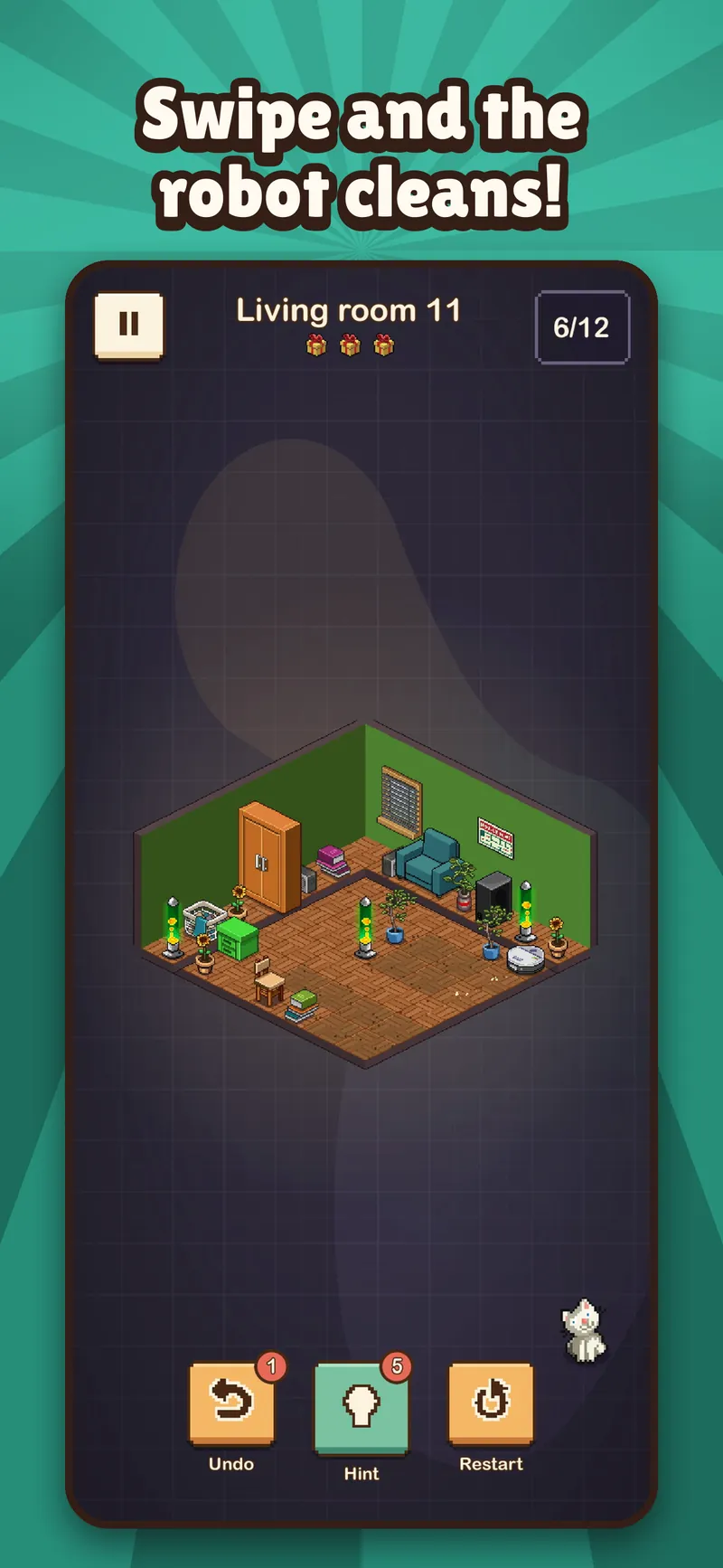
Four worlds, one new idea each
The rooms are grouped into themed worlds, and each world adds exactly one new idea instead of piling on rules. The living room teaches plain sliding. The kitchen introduces rugs, which stop the robot in the middle of a run and turn into useful anchors. The bathroom adds dark stains that need two passes, so a tile you already crossed can still be dirty. The office puts holes in the floor, where a wrong slide ends badly.
Later rooms also get bigger and fill up with furniture that occupies more than one tile, which changes where the robot can be stopped. A new world opens once you have collected enough gifts in the previous one, so you can move on without clearing every single room first.
- Living room: the basic slide.
- Kitchen: rugs stop the robot.
- Bathroom: dark stains need two passes.
- Office: holes in the floor punish a careless slide.
Gifts turn into a home of your own
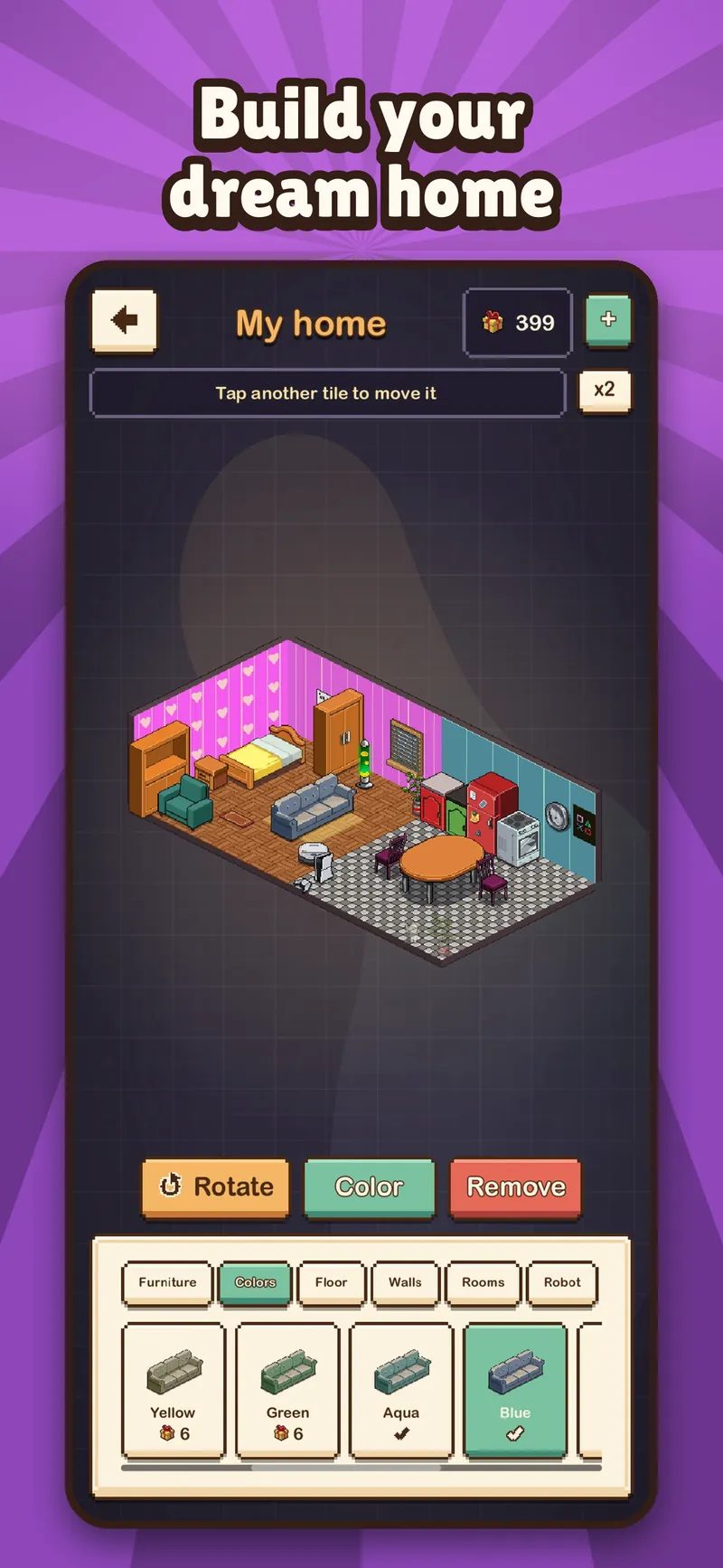
The gifts you win are a currency, not a score. You spend them in My Home, where you buy furniture, pictures, floors and wallpapers, pick a colour for each piece, move things around and join new rooms into one growing house. It is the calm half of the game: the puzzle asks for precision, the home asks for nothing at all.
There are also 30 Game Center achievements to unlock, from cleaning your first room to perfect clears without hints, and a daily room for a fresh challenge when you have run out of things to tidy. Everything runs offline, so the game works on a train or a plane.
Behind the scenes: built in Godot, solved before it ships
Tidy Tiles is made with Godot 4.5. The rooms are not hand-placed by eye and hoped for the best: a generator lays out the furniture, and a breadth-first solver plays every room to find its shortest solution. That optimal number becomes the move goal you see on screen, which is why a three-gift clear is always possible and never lucky.
The same solver powers the in-game hint, so the help you get is the real next best move rather than a guess. Before a build goes out, an automated headless test plays back the optimal solution of every room and checks that it still ends in a clean floor, which catches a broken rug, stain or hole rule before a player ever meets it.
Tidy Tiles is out now on iPhone, and the robot is waiting for somebody to point it in the right direction.