Art direction · · 7 min read
How we created 60 hand-drawn opponents
A practical character production method for building 60 readable hand-drawn opponents: silhouettes, rule hooks, reusable poses, export discipline, and gameplay-size testing.
Give every character one readable sentence
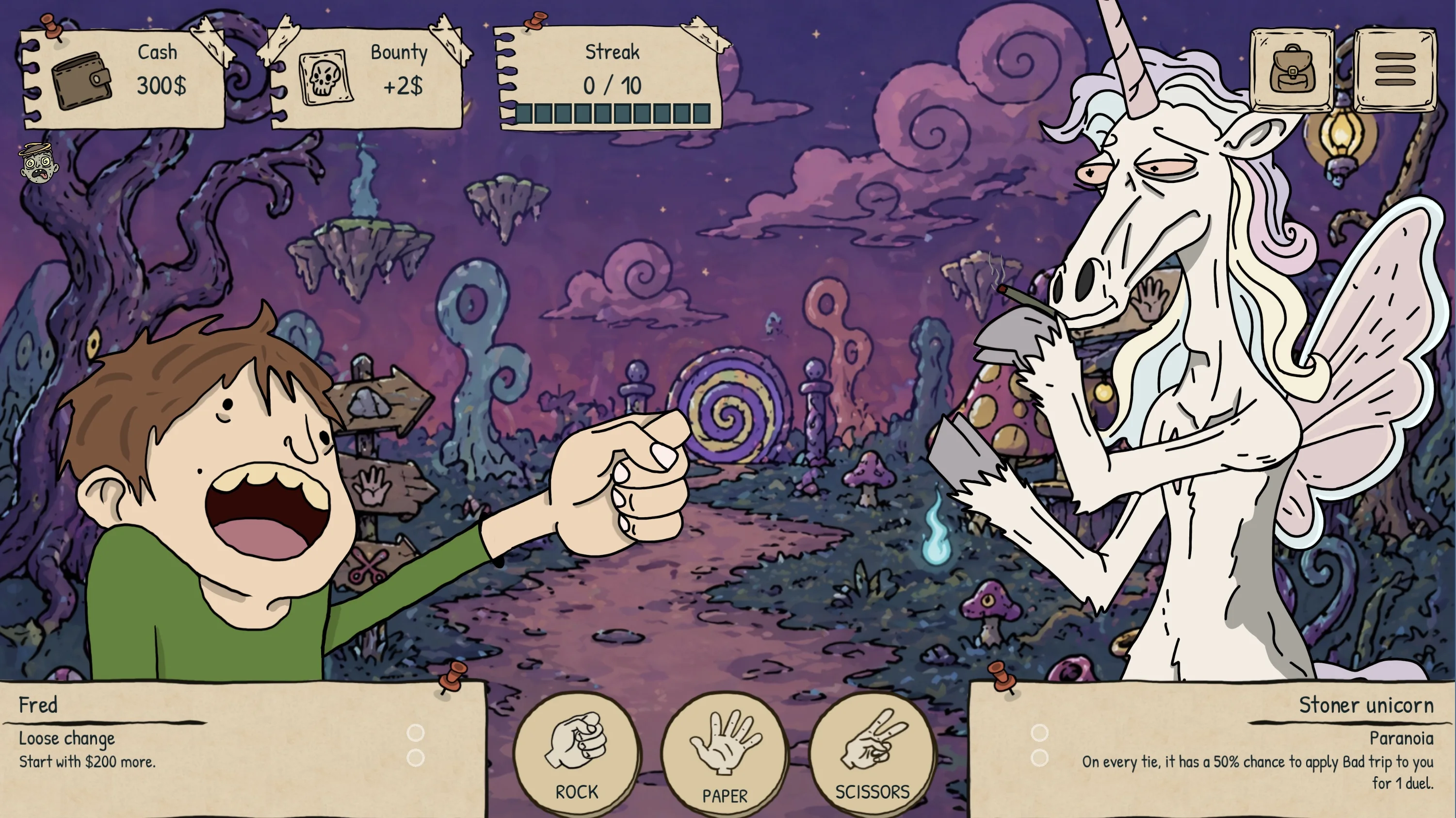
Before drawing, describe the opponent in one sentence that combines personality and gameplay. A useful sentence is not only 'an angry demon'; it is 'a proud demon who punishes repeated hands.' That sentence guides pose, expression, prop and mechanic.
If two characters need the same sentence, one of them needs a stronger hook. The goal is not visual noise. It is fast recognition while the player is making a decision.
Design the silhouette at gameplay size
Start with a black silhouette and test it inside the real duel layout. Large horns, a narrow head, an uneven posture or one clear prop survive scaling better than small costume details.
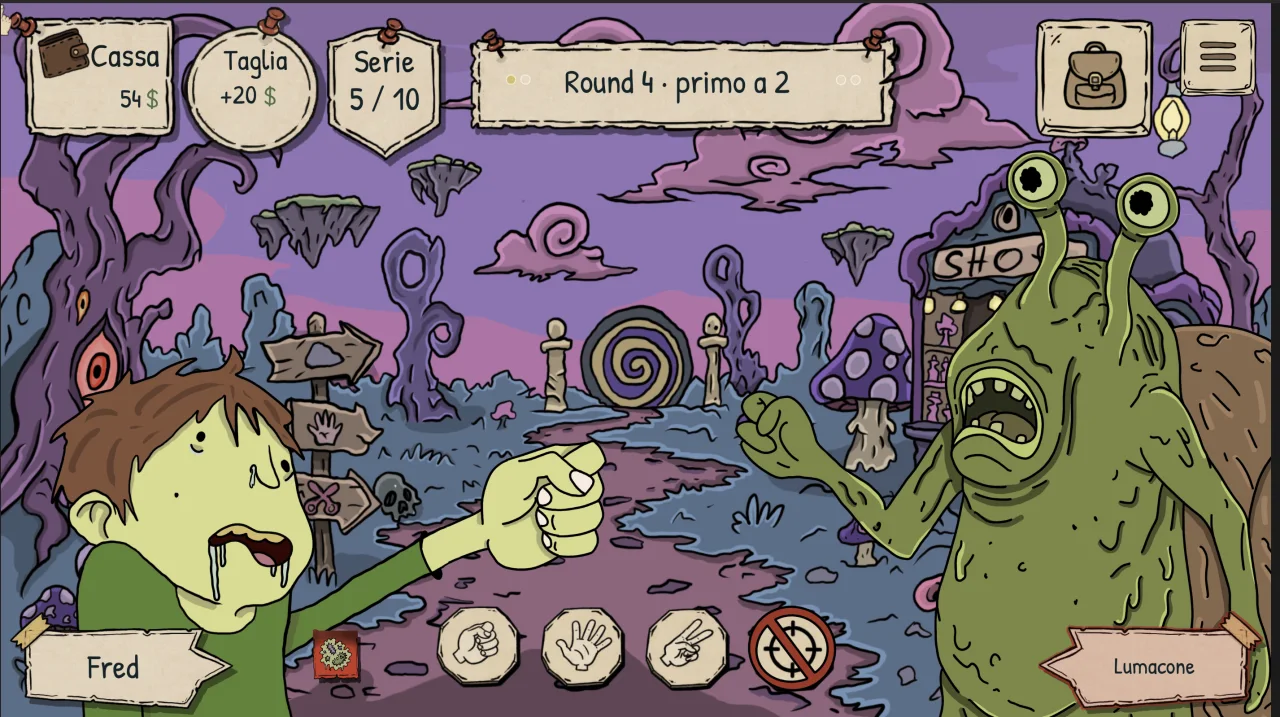
Check the character beside Fred, the choice buttons and text panels. A beautiful illustration that hides the hand icons or becomes a grey shape at 720p is not finished game art.
Reuse production structure, not personality
A large cast needs shared technical rules: canvas size, pivot, safe area, naming, export format and animation timing. Those constraints let the duel scene swap characters without manual correction.
Personality should come from silhouette, face, gesture, palette and mechanic. Reusing the same technical frame saves time without making the cast feel cloned.
- Keep a fixed anchor for the body and interaction hand.
- Use a consistent safe area for names and rule text.
- Export source art and optimized runtime art separately.
- Name files with stable character IDs, not display names.
Connect art and mechanics early
Do not finish all sixty portraits before testing the rules. Build small batches. Put a rough character into the game, test whether the mechanic reads, then finish the art.
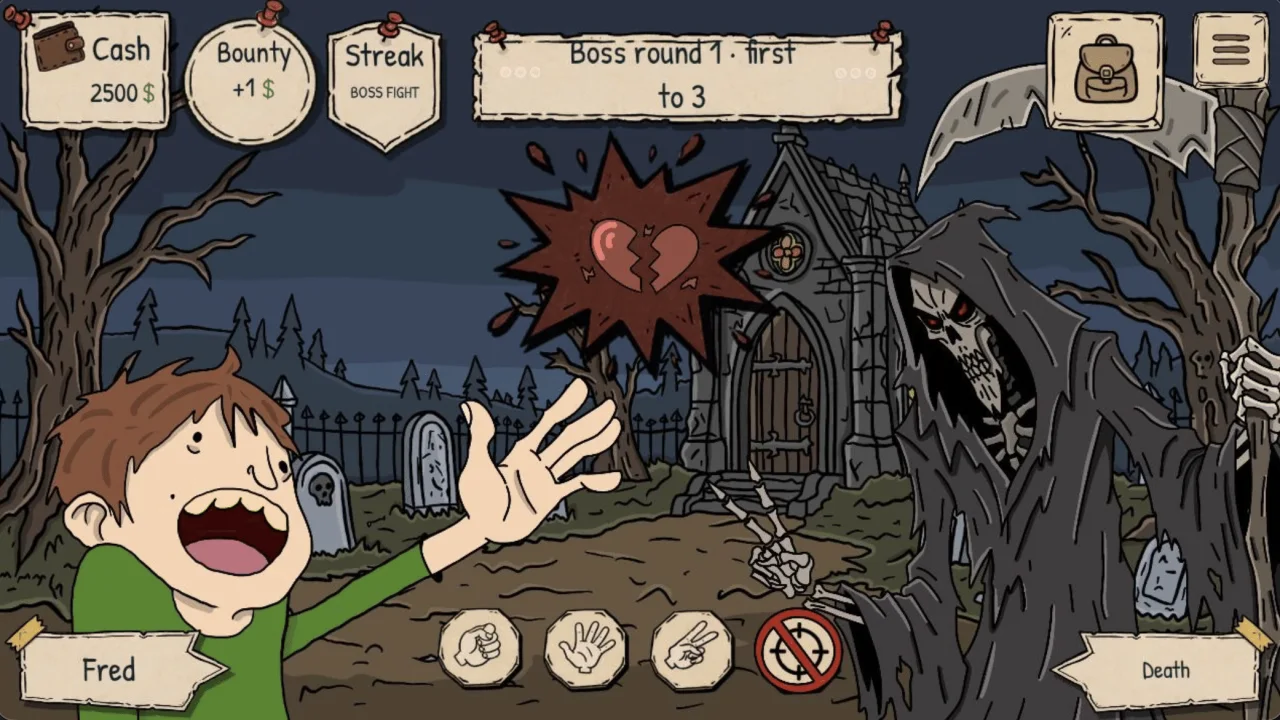
The opponent should visually suggest the kind of pressure they create. A boss that bans a hand needs a pose and prop that make restriction feel intentional, not like a hidden spreadsheet rule.
Use a review checklist
For each export, review silhouette, contrast, crop, eye direction, overlap with UI, readable expression and file size. Then view the character on the weakest target hardware and at the smallest supported resolution.
A content spreadsheet should connect character ID, art status, mechanic status, localization status and test status. This prevents a finished portrait from hiding an unfinished gameplay rule.